
probably the most important scale a musician could learn
When we see a diagram like below, in the context of reciting scales, we should start at the bottom (the lower E String). When holding a guitar, this is the string that's closest to you (it's also the thickest string on the guitar). It's technically the highest in a physical space sense, but its the lowest in a musical sense. This is why guitarists are crazy!
Play the E Major Scale (open position)
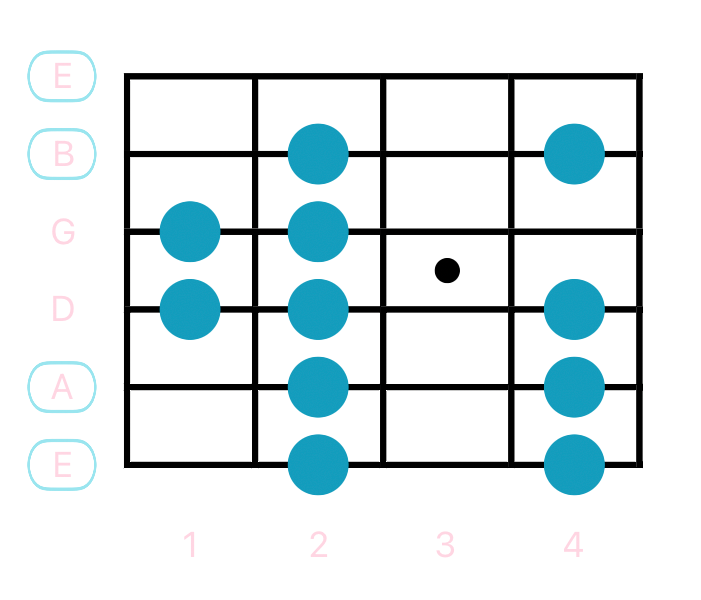
A solid understanding of the major scale, both by ear and visually, is probably the most important concept when learning music theory. Let's take a look at this scale written out in sheet music / tablature.
Recite this scale forward, backward, and after you've mastered it, play it again! You can think of the major scale as the "default scale" when dealing with music theory.
Now lets look at the major scale across the entire fretboard:
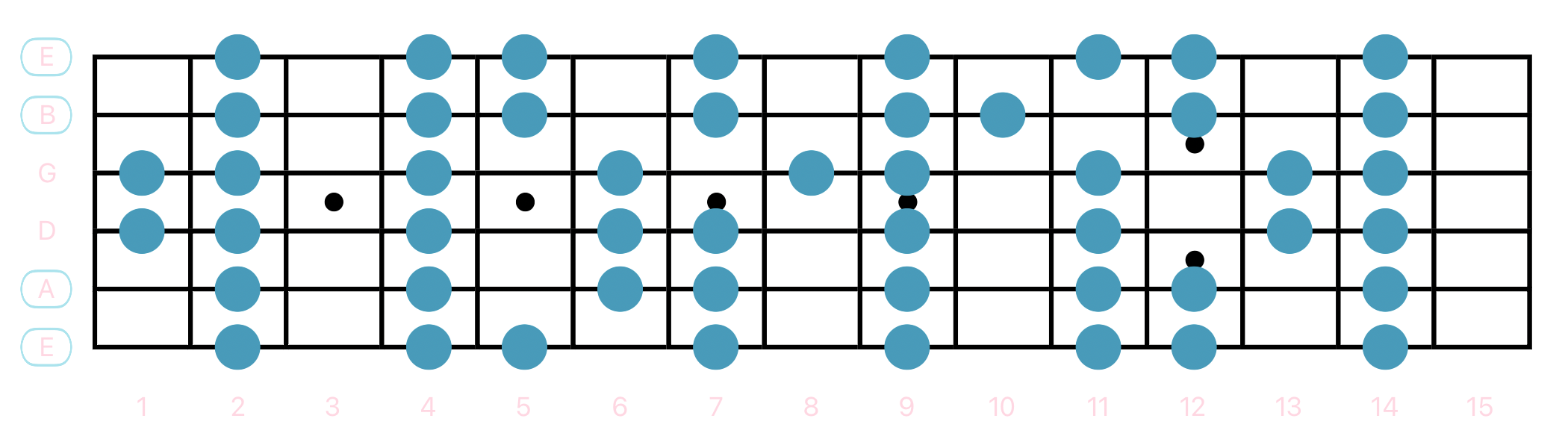
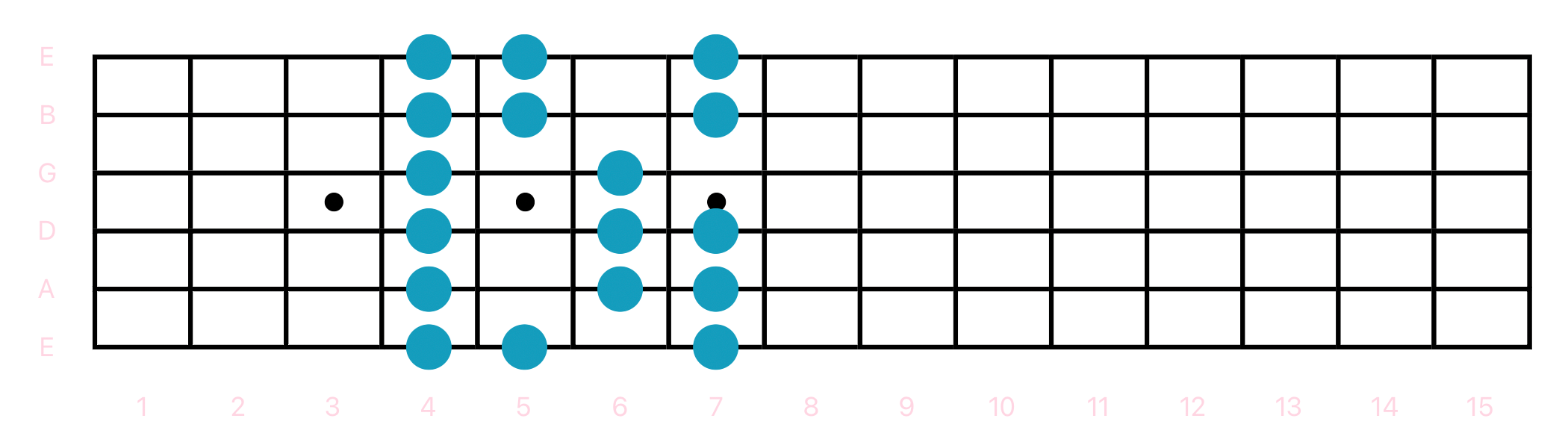
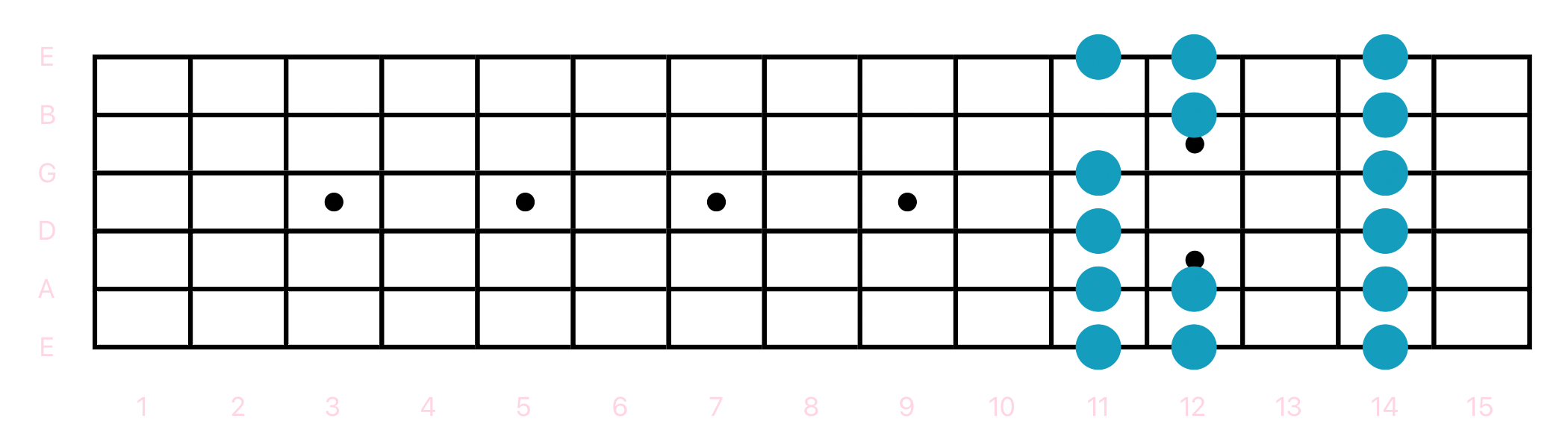
It can seem overwhelming at first, but the trick is to break it down into smaller pieces, learning one section of the fretboard at a time. Start with the open position version up at the top, and when you're comfortable, move down a couple of frets and memorize the notes between frets 4 and 7 (4th Position). Recite the scale, practicing by going up and down the full 2 octaves, and then continue on to the next section of frets.
E Major Scale, 4th Position
E Major Scale, 7th Position
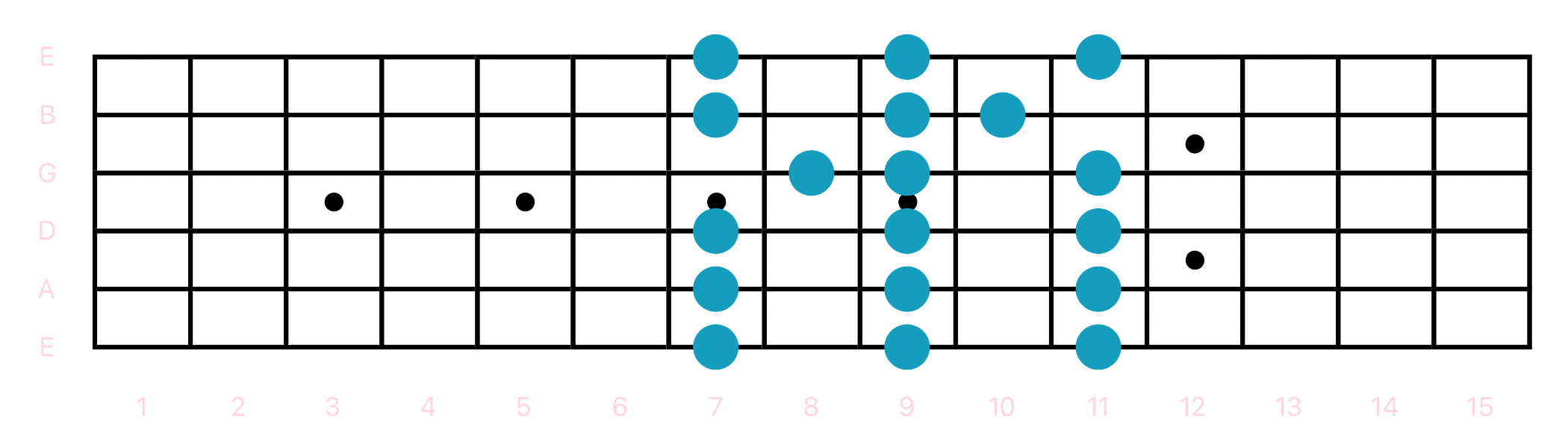
E Major Scale, 11th Position
Published on: October 17, 2024